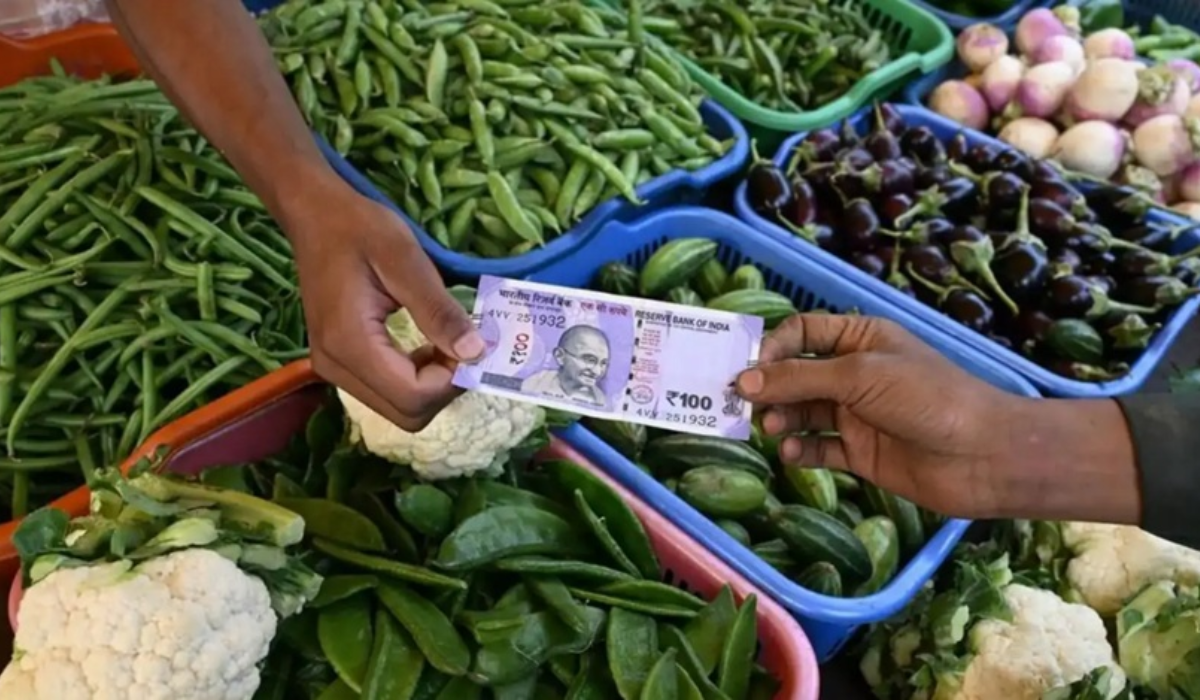
| New Delhi – India’s retail inflation dropped to 1.54% in the month of September from 2.07% in the preceding month. The decline in inflation in September is mainly attributed to a favourable base effect and to a decline in the inflation of vegetables, oil and fats, fruits, pulses, cereal, and eggs, the government said in its statement. Retail inflation is lowest since Jun 2017, when it stood at 1.46%. Food prices fell 2.28% year-on-year in September versus a revised 0.64% drop in August. Vegetable prices declined 21.38% after a 15.92% fall in the previous month. Core inflation, which excludes volatile items such as food and energy and is an indicator of demand in the economy, was at 4.5% in September compared with 4.1% in August, according to two economists. The central bank this month raised its economic growth forecast to 6.8% from 6.5%, putting it at the upper end of the government’s 6.3%–6.8% estimate. The Retail inflation has also dropped below the Reserve Bank of India’s (RBI) tolerance band of 2% – 6% for a second time in three months leaving room for the central bank to cut rates one more time when it meets in December. The RBI has reduced interest rates by 100 basis points so far this year. It left the policy rate unchanged at 5.5% at its October monetary policy review, but signaled scope for a rate cut in December. In its October bi-monthly monetary policy, the Reserve Bank lowered its inflation projection for 2025-26 to 2.6 per cent from 3.1 per cent estimated in August. The consumer price index (CPI) based inflation was 5.49 per cent in September 2024. “The decline in headline inflation and food inflation during September 2025 is mainly attributed to favourable base effect and decline in inflation of vegetables, oil and fats, fruits, pulses and products, cereal and products, egg, fuel and light,” the National Statistics Office (NSO) said in a statement. |