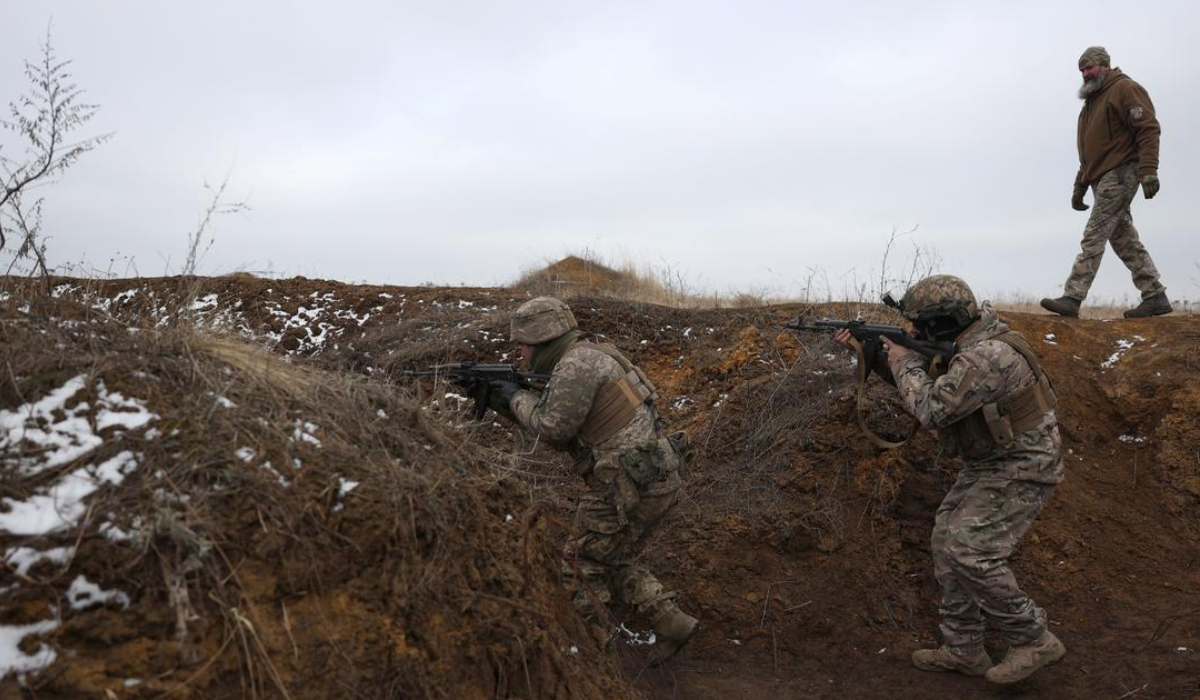
| Hyderabad – A 37-year-old Hyderabad man, Mohammed Ahmed, is at the center of a dramatic and deeply troubling story that has sparked calls for urgent action from Indian authorities. Ahmed’s ordeal highlights the vulnerability many job-seekers face when responding to overseas opportunities marketed by unlicensed recruiters—a growing, global concern. Mohammed Ahmed left for Russia on April 25, 2025, after being offered a construction job by Trust Consultancy, a Mumbai-based recruiting firm. Upon his arrival, Ahmed and more than 30 other Indian nationals found themselves without any employment for nearly a month. They were then moved to a remote location, where they were sent through weapons training under duress. This coerced group included six Indians. Almost immediately after training, Ahmed and 25 others were taken close to the Ukraine border, where pressure escalated—they were threatened with violence if they refused to fight for Russian forces in the ongoing war with Ukraine. Ahmed’s wife, Afsha Begum, has detailed their ordeal in a letter to the External Affairs Minister, S Jaishankar, urging for immediate diplomatic action to secure Ahmed’s release and repatriation. The family, including Ahmed’s paralysed mother and two young children, is living in constant fear and uncertainty, reliant on him for survival. “We are terrified every time the phone rings. We just want him back,” said one relative. According to her, Ahmed, along with about 30 others, was promised work in a construction company but was instead taken to a remote area after reaching Russia. “They were forcibly given weapons and trained for nearly 26 days. Out of the group, around 30 people are said to be Indians,” she mentioned in the letter. Afsha Begum further stated that her husband and others were later taken to a border area to fight against the Ukrainian army. “My husband tried to escape by jumping from an army vehicle but suffered a fracture in his right leg. He told me that nearly 17 people from his group have died while fighting the Ukraine army, and he is being threatened to either fight or face death,” she wrote. Appealing for urgent help, she requested the Ministry of External Affairs to direct the Indian Embassy in Moscow to trace and rescue her husband. “It is requested to kindly ask the Embassy of India in Moscow, Russia to contact my husband and rescue him and send him back as soon as possible,” the letter reads. Majlis Bachao Tehreek spokesperson Amjed Ullah Khan, who has been supporting Ahmed’s family, stressed that this is not an isolated case; last year, another young man from Hyderabad who had been duped similarly died fighting in the conflict, while another individual was rescued after intervention by Indian authorities. Human trafficking and predatory recruitment schemes, often targeting low-income workers and students, have become more common as Russia faces difficulty replenishing its army amidst mounting casualties in the war with Ukraine. The tragic story of Mohammed Ahmed mirrors those of other Indian nationals, such as Sahil Majothi—a 22-year-old student from Gujarat who, according to multiple reports, was falsely accused of drug possession and coerced into military service to avoid a severe prison sentence in Russia. Many recruits are enticed with promises of generous benefits but are soon sent straight into battle, often without receiving promised compensation. These incidents have complicated India’s diplomatic stance on the Russia-Ukraine conflict. While India remains neutral and calls for peaceful resolution, these cases of conscripted nationals caught in the crossfire have intensified demands for more robust government action and stricter regulation of overseas recruitment agencies. Family appeals and public pressure are now urging authorities to more aggressively investigate, track, and intervene in such schemes. |